The Willingness to Love and Lose: Rethinking Anticipatory Grief in Animal Companionship
What does it mean to willingly embrace a love that we know will likely lead us to experience grief again? Through personal reflection and research, I explore anticipatory grief, the awareness of pet mortality, and what I call the willingness to love and lose.


As I engaged in the reflexive process of analyzing my dissertation data on pet loss, a phrase began to emerge: the willingness to love and lose.
One of the things that fascinated me about the experiences shared by those I interviewed was that, despite having experienced profound grief following the death of a beloved companion animal, many had welcomed other animals into their lives. I wondered about the emotional process of entering into another relationship after experiencing such a significant loss. What does it mean to willingly open ourselves to a love that we know will likely bring us face-to-face with grief again?
It was a question that resonated with me not only as a researcher but also as someone who had made that very decision.
I Was Never Going to Get Another Cat
I have never considered myself someone who was naturally an “animal person.” I didn't grow up with pets in my home, although my grandmother had cats. Little did I know that she was planting a cat mama seed in me all those years ago. It wasn't as though I felt compelled to be around her cats. In fact, one of my childhood memories involves watching in horror as one of her cats terrorized a mouse. Just when the mouse managed to slip through the cat's paws and appeared to be on its way to freedom, the cat would pounce on it again, all while my grandmother laughed. I was considerably less amused.
Given how much I talk about Samson and how much he continues to inspire my work, one might assume that my love for animals had always been a part of who I was. But my relationship with Samson was something I could not have anticipated. And when he died, I believed it was a once-in-a-lifetime experience.
In the hours and days following his death, I was angry. I began throwing away his belongings. Litter boxes, scratching posts, and food went into the trash. I didn't want any of it. As far as I was concerned, I was never going to get another cat. Someone even suggested that perhaps now that Samson was gone, it was time for me to find a man. Yes, someone actually said that to me, but I digress.
As insensitive as that comment was, there were other conversations that stayed with me. I remembered someone once telling me that they couldn't imagine their life without a cat. Another friend reminded me that nothing could ever replace Samson. At the time, I don't think I fully appreciated how both of those sentiments could be true. I could envision a life that included another cat without that cat occupying the space that belonged to Samson.
I still had goldfish, so at some point, I needed to make a trip to the pet store for supplies. And there...I saw cats.
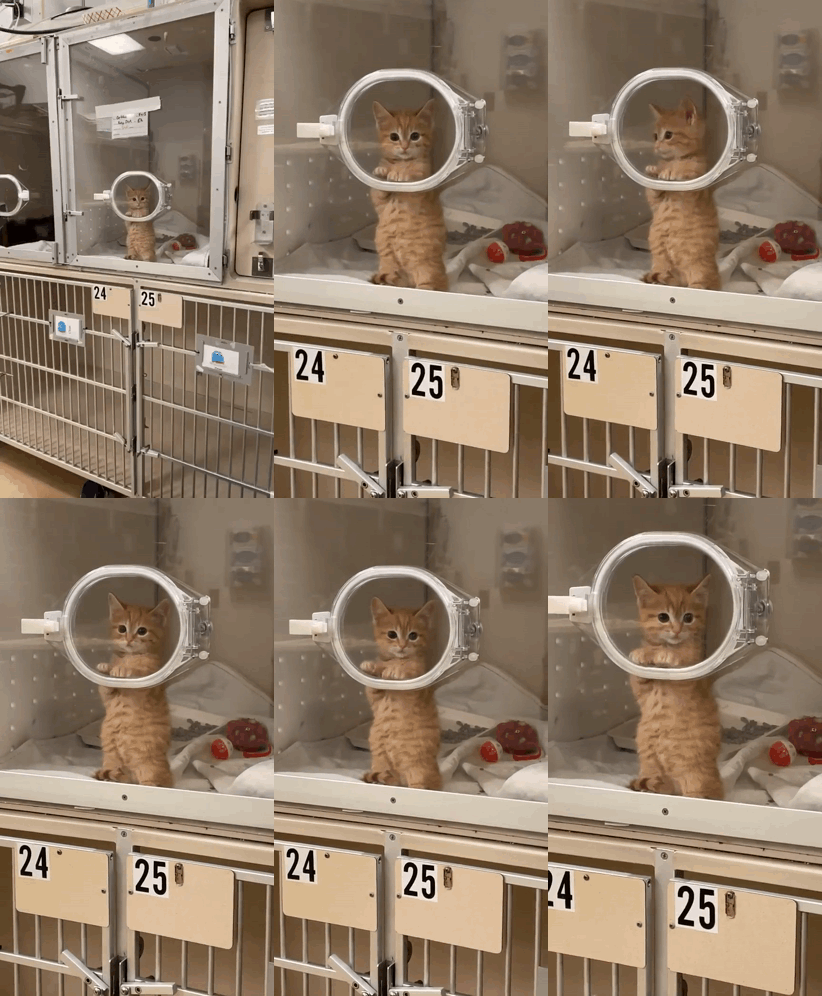
As I watched the cats who were available for adoption, something began to happen. I looked into their eyes, watched them play and pounce on their toys, and observed them going about their little feline lives. These babies weren't Samson, but there was something about being in their presence that began to melt the ice that had surrounded my heart since his death. In those moments, love began to replace some of the anger I had been carrying.
Could I love another cat? I still wasn't sure.
Permission to Love Again
Shortly thereafter, I had what I like to refer to as a visitation dream. Having experienced the deaths of many human loved ones throughout my life, these types of dreams were not unfamiliar to me. I had dreamed about Samson when he was alive, but there is something distinct about the dreams I personally understand to be visitations. The presence of my loved one is particularly vivid, and there is often a message that remains with me long after I awaken.
In this dream, there was Samson. He stood up on his hind legs and reached out his paws toward me as though he wanted to give me a hug.
I woke up from that dream knowing, with a certainty I had not experienced in the days before, that I could love another cat.
Shortly thereafter, I adopted Tina and Joe, which is a story for another blog post. What is significant about that experience, however, is that the emotional process I went through had little to do with finding closure or moving on from my relationship with Samson. I wasn't looking to replace him, nor had I reached a point where I no longer grieved his death. Instead, I had come to recognize that I was willing to experience that kind of love again.
But unlike when I welcomed Samson into my life, I now had an intimate understanding of what it meant to lose a companion animal. I knew the emotional complexities of making an end-of-life decision. I knew what it felt like to come home to a space that was no longer occupied by someone who had been such an integral part of my daily life.
And I knew that, unless the natural order of things was disrupted, I would eventually have to say goodbye to Tina and Joe as well.
Yet I chose to love them.
Understanding Anticipatory Grief
Anticipatory grief is generally understood as the grief we experience in anticipation of an expected loss. It is often discussed within the context of caregiving for a loved one who is experiencing a progressive or terminal illness. As we become increasingly aware of an impending death, we may begin to grieve not only the loss that lies ahead but also the losses we are already experiencing as our loved one's health and abilities change.
I think about my grandmother when I think about anticipatory grief. As we cared for her and witnessed the progression of her Alzheimer's disease, I watched this spunky, feisty, fearless woman, the woman from whom I inherited my laugh, change before my very eyes.
And I grieved that woman…as she was right in front of me.
There are certainly parallels between that experience and the experience of caring for an aging or terminally ill companion animal. We may grieve the gradual loss of the activities we once shared with them, changes in their behavior, or their diminishing ability to engage with the world around them. We may find ourselves reflecting on what life will be like without them while simultaneously trying to remain present for the life we are still experiencing together.
In the context of animal companionship, there is also the added complexity of potentially having to make a decision about euthanasia. The anticipation of a companion animal's death may be accompanied by the emotional weight of knowing that we may have a role in determining when that death occurs.
These experiences are consistent with much of what we understand about anticipatory grief. However, as I reflected on my research and my own experiences, I began to wonder whether there was another dimension of our relationship with loss in animal companionship that warranted greater exploration.
When my grandmother died, there was no decision to welcome another grandmother into my life. Although I would continue to form meaningful relationships with other people, I was not faced with the decision of whether I would once again enter into that particular kind of relationship.
With animal companionship, many of us are presented with that choice. We can decide whether to welcome another animal into our lives, often with the understanding that their lifespan will be considerably shorter than our own.
It is this distinction that continues to intrigue me.
An Awareness of Mortality
One of the main themes that emerged from my research on pet loss was anticipatory grief. Within this theme, I identified a subtheme that I referred to as awareness of pet mortality. As individuals reflected on their experiences of animal companionship, there was an acknowledgment of the finite nature of these relationships. Despite the awareness that they would eventually have to say goodbye, the experience of loving and sharing their lives with their companion animals remained profoundly meaningful.
What interested me about this awareness was that it did not necessarily arise from an impending death. It could be present long before an animal began to exhibit signs of aging or declining health. In fact, it could be present from the very beginning of the relationship.
This raises a question for me:
Is the awareness that a loss will eventually occur the same as grieving in anticipation of that loss?
We understand, of course, that all of our relationships are finite. Mortality is not unique to animal companionship, nor is the willingness to form new attachments following a significant loss. However, the disparity between human lifespans and those of many of the animals with whom we share our lives introduces an interesting dimension to these relationships. For many of us, the possibility of outliving our companion animals is not a remote consideration but a reality we recognize when we welcome them into our homes.
I was aware of this reality when I adopted Tina and Joe. But I would not characterize the entirety of my relationship with them as an ongoing experience of anticipatory grief. There is a difference between acknowledging their mortality and actively grieving their eventual deaths. I may experience moments when the thought of losing them evokes feelings of sadness or anxiety, but that awareness also exists alongside the joy, humor, companionship, and love that I experience with them every day.
What I find particularly fascinating is how our previous experiences of loss may inform our willingness to enter into these relationships again. Having experienced the death of a companion animal, we may no longer be approaching animal companionship with only an abstract understanding of mortality. We know something about the emotional consequences of losing that relationship, and yet we may willingly open ourselves to the possibility of experiencing them again.
What is it about the human–animal bond that makes us willing to do so?
The Willingness to Love and Lose
One of the perspectives I have shared in my work is that pet loss is a way in which we experience the human–animal bond. Grief is not an experience that exists outside of the bond, nor does the physical death of a companion animal necessarily signify the end of our relationship with them.
I wonder, then, how our experiences of pet loss continue to inform not only our relationship with the animal who has died but also the relationships we develop with other animals throughout our lives.
When I adopted Tina and Joe, I did so with an understanding of animal companionship that I did not have when I adopted Samson. I knew what it meant to love a cat, but I also knew what it meant to lose one. My experience of grief had become part of my understanding of what it meant to share my life with another animal.
Certainly, not everyone who experiences the death of a companion animal will choose to welcome another animal into their life. The willingness or decision to do so is not an indication of how well someone has navigated their grief, nor is it a measure of the love they had for the animal who died. There are many reasons why someone may or may not make that decision, and each deserves to be respected.
For those of us who do, however, I remain curious about the emotional process through which we come to that decision.
How do we reconcile our awareness of mortality with our desire for companionship? How do our experiences of grief inform our capacity and willingness to form new attachments? And to what extent does our existing understanding of anticipatory grief capture the complexities of these experiences?
These are questions I hope to explore further in my work. I am not suggesting that we abandon our understanding of anticipatory grief in the context of pet loss, but rather that we consider what additional insights might emerge when we examine the concept within the unique context of animal companionship.
When I look at Tina and Joe today, I am reminded of the capacity for love that I discovered through my relationship with Samson. I didn't adopt them because I had stopped grieving him. I adopted them because I had come to understand that my experience of losing him did not diminish my desire to experience that kind of love again.
One day, I will likely have to say goodbye to Tina and Joe. I cannot know what those experiences will be like, and I do not want the anticipation of those days to overshadow the relationships I experience with them today. But my awareness of their mortality is part of what I brought into my relationships with them.
Perhaps that is what I was beginning to understand when those words emerged during my research: the willingness to love and lose.
We know how much it can hurt.
And still, we choose to love.


